(703) 372-5665

Crowns vs. Veneers: Which Treatment Gives You the Best Value?


Crowns vs. Veneers: Which Treatment Gives You the Best Value?
Along any main street, you can tell which buildings only needed the surface restored and which needed the frame rebuilt. Teeth are not so different. Some need a careful new face, while others need a stronger outer shell because the inner structure has already been worn down, cracked, filled, or weakened by decay.
That is the real question behind crowns vs. veneers. Both can improve how a tooth looks, but they are not interchangeable. The better choice depends on how much healthy tooth remains, what kind of damage is present, how the bite comes together, and whether the goal is cosmetic, structural, or both.
Lorton Town Dental in Lorton, VA offers restorative dentistry care and porcelain veneer options for patients weighing cosmetic and structural choices.
The Basic Difference Starts With Coverage
A veneer is a thin custom covering bonded to the front surface of a tooth. It is usually used on visible front teeth when the main concerns are color, shape, minor chips, small gaps, or mild unevenness.
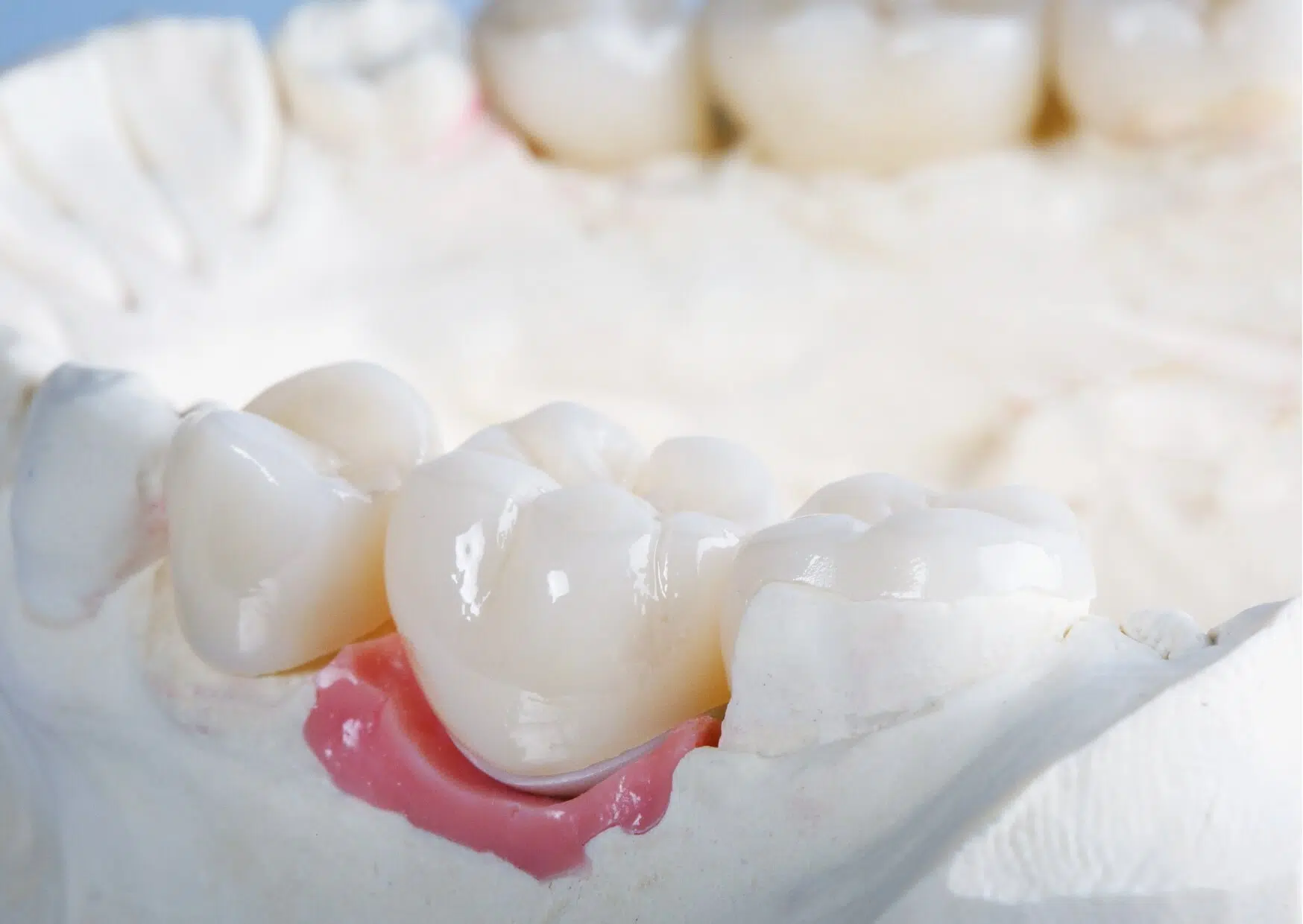
A crown covers most or all of the visible part of the tooth above the gumline. In practical terms, it acts more like a cap around the tooth, which is why it is often chosen when a tooth has lost significant structure.
That difference in coverage matters. Veneers are usually more conservative, while crowns are generally used when protection and reinforcement matter more. For a patient-friendly overview of veneers vs. crowns, Cleveland Clinic explains why the two are used in different situations.
When Veneers Usually Make More Sense
Veneers are often considered when front teeth are healthy overall but do not look the way a patient wants. Common reasons include deep staining that does not respond well to whitening, worn edges, small chips, slight asymmetry, and spaces that are too minor to require orthodontic treatment.
Cosmetic concerns may be what brings someone in, but the tooth still sets the limits. If the enamel, the hard outer layer of the tooth, is largely intact and the tooth is not heavily filled or fractured, porcelain veneers may be a reasonable option.
For a deeper look at benefits and tradeoffs, see pros and cons of veneers. Veneers are not ideal for every tooth with major decay, large existing fillings, active grinding damage, or a crack that extends deeper into the tooth.
When Crowns Are Often the Safer Choice
Crowns are often recommended when a tooth needs more than a cosmetic adjustment. A tooth that has had root canal treatment, a large cavity, a large filling, or a fracture may need broader coverage to reduce the risk of further breakage.
Think of an old station house with a weakened roofline. Fresh paint will not stabilize the beams. In the same way, a veneer may improve appearance, but it does not replace the support a tooth may need when much of the natural structure is already compromised.
This is where structural protection matters more than surface refinement. A crown can help a damaged tooth function more safely under chewing forces, especially in the back of the mouth where pressure is higher.
In those cases, a focused restorative dentistry evaluation is often the right next step. For practical guidance on dealing with a loose or lost restoration, including what to do if your crown falls off, see that guide.
Tooth Location Changes the Conversation
Front teeth and back teeth live different lives. Front teeth are more visible and often become the focus of cosmetic treatment, while back teeth carry much of the force of chewing.
Because of that, veneers are most commonly placed on front teeth. Crowns can be used on both front and back teeth, but they are especially common on molars and premolars that have been weakened.
A dentist also looks at the bite, meaning how the upper and lower teeth meet. If a tooth takes heavy force during chewing or clenching, that can change which option is more predictable over time.
Material Choice Matters, but It Comes Second
Patients often ask whether porcelain, ceramic, or other materials are best. That is a fair question, but the diagnosis comes first. The restoration should match the condition of the tooth before it matches a preference list.
Porcelain and ceramic materials are commonly used for both crowns and veneers because they can mimic natural enamel well. Still, the most attractive material is not automatically the right one if the tooth needs more coverage or stronger support.
A well-planned restoration should fit the tooth, the bite, and the long-term goal. Material choice matters, but only after the dentist has decided whether the tooth needs a veneer, a crown, or in some cases neither.
How Dentists Decide Between Crowns and Veneers
Dentists usually weigh several factors at once. The amount of remaining enamel, the size of old fillings, the presence of decay, the history of fractures, bite pressure, grinding habits, gum health, and the patient’s cosmetic goals all influence the recommendation.
The decision is rarely based on appearance alone. A tooth can look like a simple cosmetic case in the mirror and still show deeper weakness on examination or X-rays.
There is also a practical side to this. If a restoration fails, the next step is often more involved than the first. That is one reason many dentists prefer a treatment plan that respects the tooth’s long-term limits rather than only its short-term appearance.
A Quick Comparison
| Feature | Veneers | Crowns |
| Main purpose | Cosmetic improvement with some surface protection | Fuller coverage for strength and protection |
| Tooth coverage | Front surface mainly | Most or all of the visible tooth |
| Best fit | Healthy front teeth with cosmetic concerns | Teeth with large fillings, fractures, decay, or major weakening |
| Tooth reduction | Often less | Usually more |
| Common location | Front teeth | Front or back teeth |
| Not ideal when | Tooth is heavily damaged or unstable | Tooth issue is minor and limited to the surface |
Situations That Need Prompt Dental Attention
Some symptoms should shift the conversation away from cosmetics and toward diagnosis. Pain when biting, lingering sensitivity to hot or cold, swelling, a loose feeling, bleeding around one tooth, or a visible crack may signal a problem that needs evaluation before any elective restoration is considered.
A darkened tooth can sometimes be only a color issue, but it may also reflect prior trauma or internal changes in the tooth. A chipped tooth may be more than a chip if the fracture extends deeper than it appears.
Seek prompt dental care if there is facial swelling, fever, pus, severe pain, or sudden difficulty biting on a tooth. Those findings can suggest infection or a deeper structural problem and should not be treated as a simple cosmetic concern.
Cleveland Clinic outlines common dental emergency signs that warrant timely care. For urgent issues like a broken tooth or severe pain, seek emergency care.
Crowns vs. Veneers Is Also a Question of Longevity
Neither crowns nor veneers are permanent in the sense of never needing maintenance. They can last many years, but lifespan depends on the original condition of the tooth, the quality of the fit, oral hygiene, bite forces, grinding, and everyday habits.
Coffee, tea, smoking, nail biting, ice chewing, and untreated clenching can all affect long-term performance. So can delayed care when a margin, the edge where the restoration meets the tooth, starts to leak or collect plaque.
A useful way to think about this is that restorations age the way neighborhoods do. Even beautiful work needs upkeep, and small changes are easier to address before they become major repairs. Long-term research on crown and veneer survival also supports the idea that durability depends on both the restoration and the conditions around it.
What to Ask at a Consultation
A good consultation should explain not just what is possible, but what is appropriate. If a dentist recommends veneers or crowns, ask what problem is being treated first: color, shape, fracture risk, old fillings, decay, or bite stress.
It is also reasonable to ask how much healthy tooth structure remains, whether there are signs of grinding, whether gum position affects the result, and what alternatives exist. In some cases, whitening, bonding, orthodontic treatment, or replacing an old filling may be enough.
For a broader look at how veneers compare with other treatments, see veneers vs. other options. The best cosmetic dentistry usually starts with restraint.
A treatment plan should make the tooth look natural, but it should also respect biology, function, and the fact that every future repair tends to become more complex than the last. A careful exam can turn a broad search about crowns and veneers into a decision that actually fits the tooth in front of you.
That is where the next step becomes useful: not guessing which treatment sounds better, but finding out which one your mouth can support safely over time.
Lorton Town Dental provides restorative dentistry in Lorton, VA and nearby Springfield and Alexandria; call (703) 372-5665 to schedule an evaluation for crowns or veneers.
FAQs
Are veneers better than crowns?
Not necessarily. Veneers may be better for front teeth that are healthy but have cosmetic concerns, while crowns may be better when a tooth needs more protection because of decay, fracture, or large fillings.
Do crowns look less natural than veneers?
They can look very natural when well planned and well made. The final appearance depends on the tooth, gumline, material, and how much structural repair is needed.
Can a veneer be placed on a damaged tooth?
Sometimes, but not always. If the tooth is significantly weakened, heavily filled, cracked, or decayed, a crown may be the safer option.
Are crowns only for back teeth?
No. Crowns are common on back teeth because those teeth handle more force, but they are also used on front teeth when more complete coverage is needed.
Should tooth pain be evaluated before cosmetic treatment?
Yes. Pain, swelling, bite tenderness, or temperature sensitivity should be assessed before choosing an elective cosmetic restoration.